

The Virginia Bear Mange Study: Using Hair Corrals and Trail Camera Data to Study Sarcoptic Mange in Virginia’s Black Bears
By Isabella Sciarrino for Whitetail Times
Sarcoptic mange has become a focal point of black bear research in Virginia, as the increase in case numbers and severity is a cause for concern amongst biologists, hunters, landowners, and wildlife enthusiasts alike.
Sarcoptic mange is a highly contagious skin disease caused by a microscopic mite, Sarcoptes scabiei. These mites build a network of tunnels within a mammal’s skin layers, where they feed, defecate, and lay eggs (Bornstein et al. 2001). The mites’ construction efforts have cascading effects on their mammalian hosts, causing symptoms such as hair loss, scaly and thickened elephant-like skin, lesions, and severe itching.
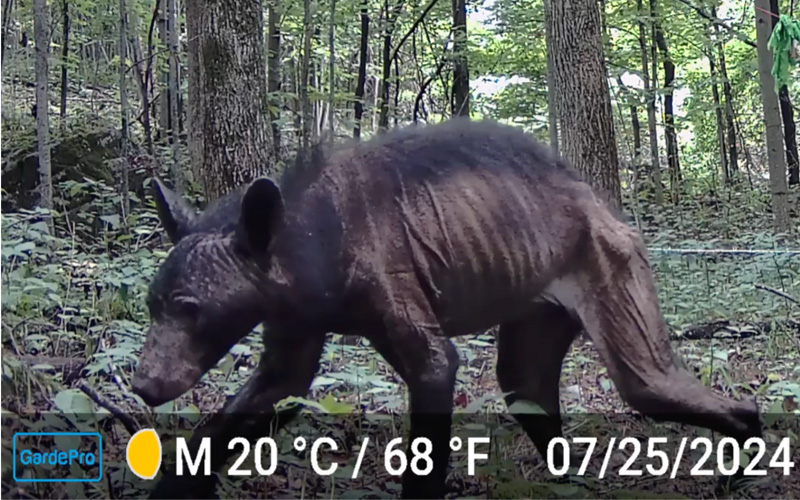
A black bear with mange captured on trail camera.
If the disease progresses, the host may become emaciated (underweight and malnourished) and exhibit altered behavior, and can even die from the infection (Pence and Ueckermann 2002). The disease is not always fatal, as some black bears can, and have, recovered from sarcoptic mange in Virginia (DWR 2023).
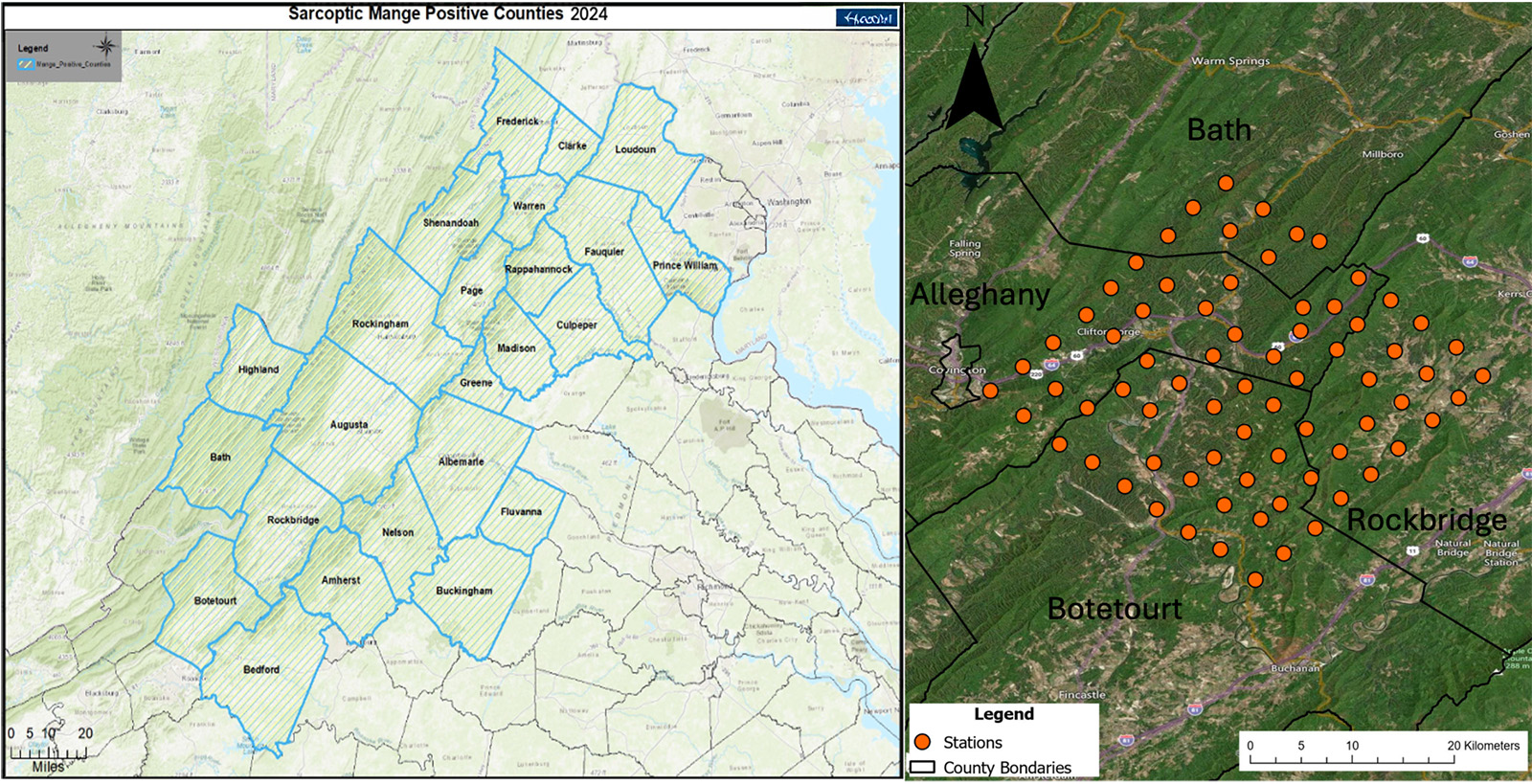
In North America, sarcoptic mange is commonly found in canid species such as coyotes, foxes, and occasionally domestic dogs. However, sarcoptic mange appeared in Virginia’s black bear population in 2014, with a few (thought to be) isolated cases in Frederick and Shenandoah counties. Fast forward to 2025, and there are at least 24 mange-positive counties in the state, as the disease has spread south and east (Figure 2a) (DWR 2024). Additionally, surrounding states are also experiencing sarcoptic mange in their black bears including West Virginia, Maryland, and Pennsylvania. Because of the disease’s relative newness in black bears, especially in Virginia, little is known about how bears transmit and respond to sarcoptic mange and how it differs from canid mange infections.
As a result of this growing concern for the black bear population in the state, Virginia Tech’s Department of Fish & Wildlife Conservation and Virginia’s Department of Wildlife Resources (DWR) teamed up in 2024 to form the Virginia Bear Mange Study (VBMS). The study’s main goals are to understand how mange is impacting bear densities in Virginia, as well as its effects on bear health and behavior.
During the summer 2024 field season, our team strategically deployed hair corrals in two separate areas in Virginia—mange-endemic counties across Bath, Rockbridge, Botetourt, and Alleghany, and mange-free counties Smyth, Grayson, and Wythe. Hair corrals consist of barbed wire enclosures wrapped around three to five trees with an attractant hung in the center. These hair corrals allow us to collect bear hair to genetically identify individuals and estimate and compare densities in the mange-affected and non-mange-affected populations. Bears are known to voluntarily cross barbed wire fences when traversing their landscape, and when a bear enters one of our corrals to investigate, it leaves hair behind on the barbed wire that we then collect. We also paired each of our hair corrals in the mange-endemic area with a motion-triggered trail camera so we could see all animal activity at our corrals and document and score the severity of bears with mange.
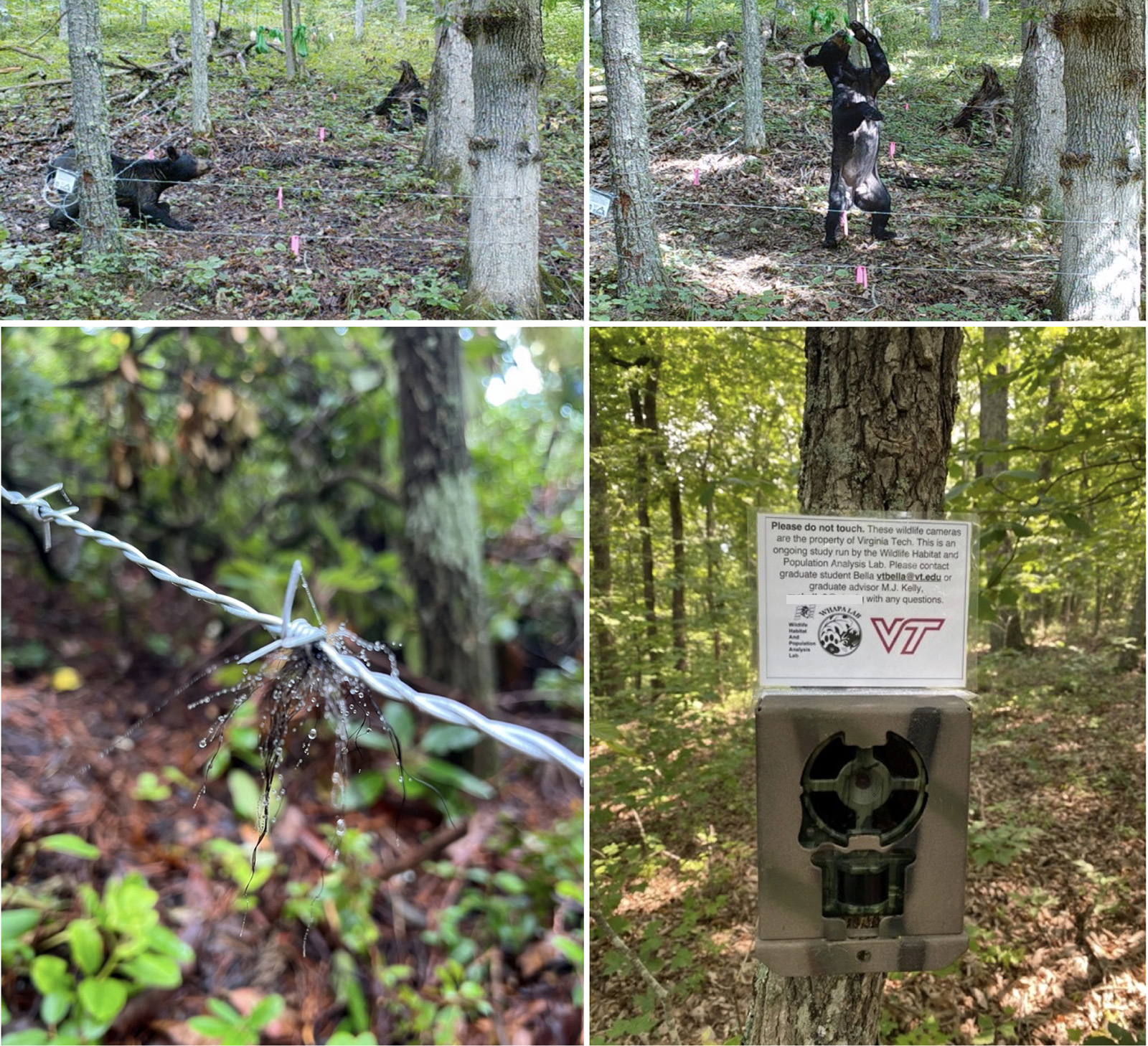
My research focuses only on our mange-endemic study area and on analyzing trail camera data we collected at that site, which covered ~745 km2. We established 73 hair corral stations, each spaced 3.4 km apart, that we monitored for eight consecutive weeks from June to August 2024. We collected 630 hair samples from the hair corrals, and we collected 598 unique bear events entering traps as documented on our trail cameras. Hair samples are currently being processed by graduate student Madison Thurber.
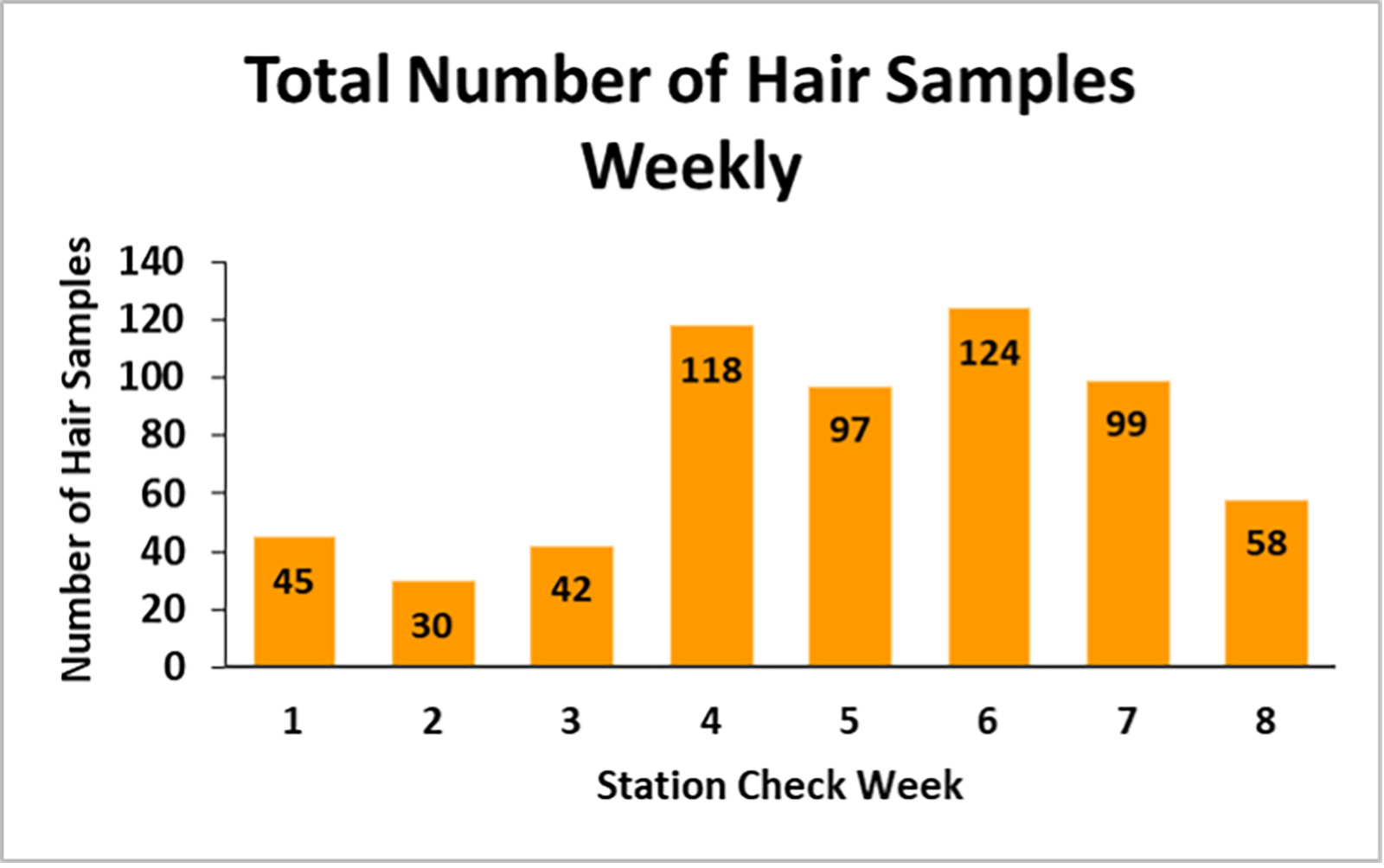
We are using trail camera video data to visually identify overtly symptomatic mange bears in our study. We accumulated 99 symptomatic mange bear events in camera images, and our preliminary results indicate that 38 percent, or 28 out of 73 stations, have visibly symptomatic mange-afflicted bears. Currently we have higher incidences of mange in the eastern and southern portions of our study area in Rockbridge and Botetourt, while we have comparable numbers of total bear events across our study area.
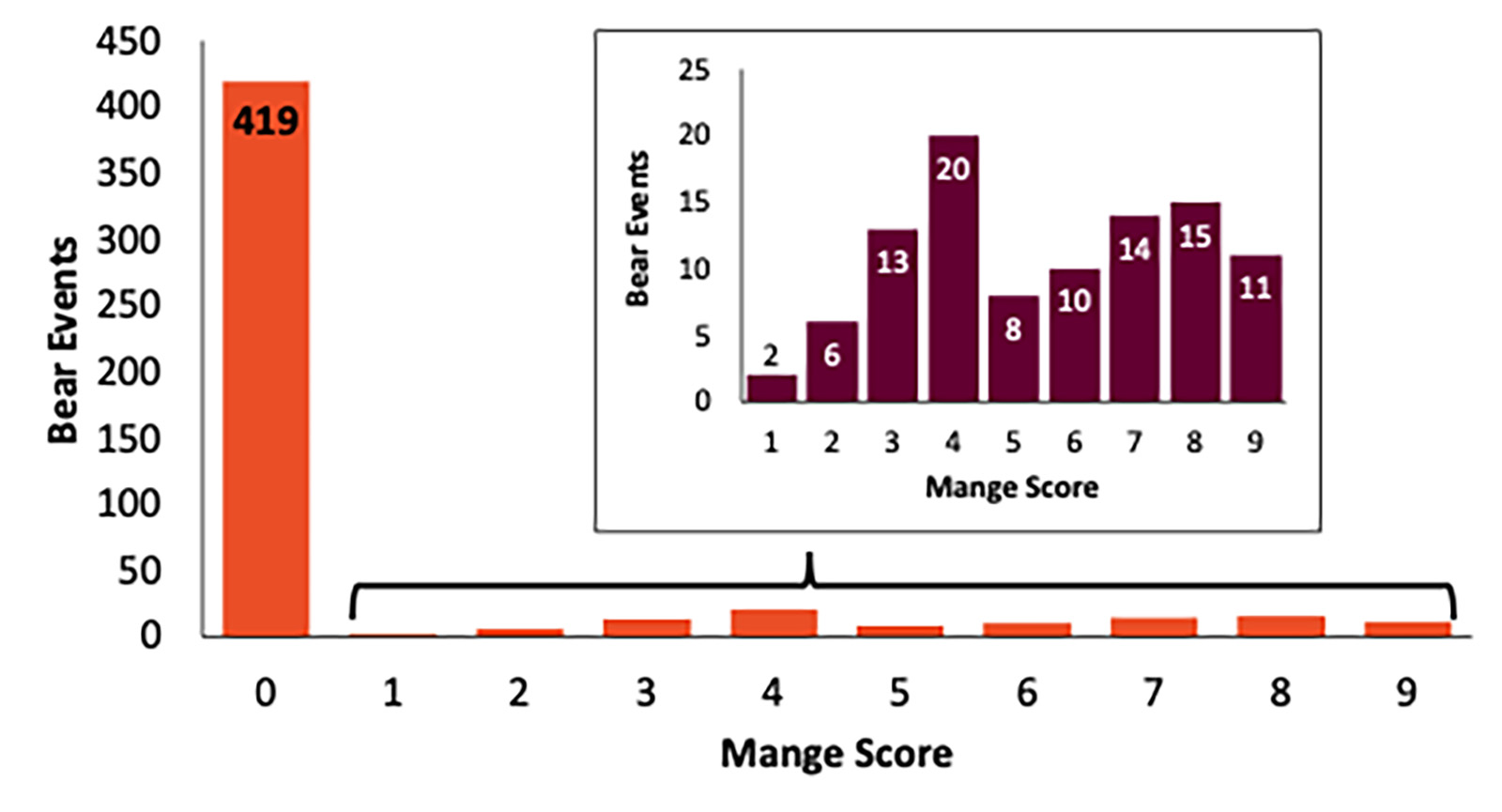
My master’s thesis will use this mange trail camera data to explore the relationship between mange occurrence and landscape variables in hopes of expanding our understanding of where and why black bear mange occurs in order to inform management decisions for Virginia’s black bear population.
You can follow along with the Virginia Bear Mange Study and read about our other graduate students’ research by visiting the VBMS website.
To report a sighting of a possible mange affected bear, please call the Wildlife Conflict Helpline: 855-571-9003.
I want to express deep gratitude to the Virginia Deer Hunter’s Association for their generous support of this research and for furthering opportunities for students pursuing wildlife conservation.
The organization’s commitment to students, hunting traditions, and wildlife science is an inspiration to us all. I would also like to thank the WHAPA lab members and volunteers, especially Jimmy Dooly, Lilly Hinkle, and Bryan Nuñez Candelario, for their help in the field and lab. None of this would be possible without their hard work and dedication. Finally, a special thank you to the landowners who gave us access to their lands. We strive for our work to meaningfully serve Virginia residents and to protect Virginia’s awe-inspiring and invaluable natural resources.
Isabella Sciarrino is a recipient of the VDHA Lee Roy Gordon Scholarship Grants, one of 39 students that have received scholarship awards since the program was established in 1989. We are very proud of these students and committed to the support of our ongoing scholarship program. Isabella’s graduate work on the increase of mange affecting the black bear population in Virginia provides much needed data for the Department of Wildlife Resources. Readers can reach Isabella via email at vtbella@vt.edu with questions and comments
Legal Disclaimer:
EIN Presswire provides this news content "as is" without warranty of any kind. We do not accept any responsibility or liability for the accuracy, content, images, videos, licenses, completeness, legality, or reliability of the information contained in this article. If you have any complaints or copyright issues related to this article, kindly contact the author above.
